Speaking of Care

Thursday, August 11, 2011

National Alzheimer's Project Act

The numbers are depressing- 5.9 million Americans are living with Alzheimer's disease right now, and someone new is diagnosed every 69 seconds.  Out of the 10 most common causes of death, it is the only one that isn't preventable, treatable, or curable.  It strikes me as odd, then, that until this year there was no concrete, centralized plan to combat this disease in our country.  The Alzheimer's Plan of Australia came out in 2006, the French Alzheimer's Plan was signed in 2008 and several other countries have followed with their own.  Finally, in January 2011 Congress passed the National Alzheimer's Project Act, a "coordinated national strategy to confront one of America's most feared and costly diseases."  NAPA is supposed to spell out how we, as a country, not only accommodate but care for the millions of people with the disease and their families and loved ones.  Still in it's infancy, it builds on the work of the Alzheimer's Association and the Alzheimer's Study Group and brings in representatives from the Department of Health and Human Services.  To their credit, the creators realized that nobody knew the disease more intimately than the people actually living with it and have been sponsoring NAPA Input Listening Sessions around the country to ask for advice and suggestions.  Earlier this week I participated in one of the sessions at a downtown hotel and was honored to have the opportunity to speak. 

It had already been an emotional day.  I had a care plan conference at Maryhaven, Dad's nursing home, earlier in the afternoon and had only a minute to run in and say hi to him afterwards.  He was sitting in the activity room with the rest of the residents, watching a John Denver video.  I cringed at the irony of them hearing "take me home," when for him that would be the ultimate gift.  Every time I come he says, "canwegohomenow? canwegohomenow?"  I don't know what his idea of "home" is, but I am certain it's not a nursing home.  I ignored Mr. Denver and as I walked over to Dad his eyes followed me.  When I got close enough he grabbed my hand and mumbled "Iloveyouforever," which is what I always say to him when I leave.  So for him to say it was incredibly powerful, and by the time I raced home and hopped on the El I was already a little teary.  I got to the hotel and was whisked down to one of the large conference rooms.  There were representatives from the Alzheimer's Association milling around, and I recognized the VP of Communications and the Special Events Coordinator, two women I met when I did a fundraiser with the association last year.  We talked and caught up for a few minutes, then everybody was asked to sit down.  We were welcomed by Harry Johns, the CEO of the association, Erna Colborn, the president of the Greater Illinois chapter, and representatives from the Department of Health and Human Services.  There was a recorded welcome by President Obama, assuring us that he would back NAPA and understood the importance of it.  Then it was our turn to speak.  Out of the 200 or so people in the audience, 21 of us got up to tell our stories and share our ideas.  I normally have no problem with public speaking, but when it was my turn I could feel my voice quiver. 

"Forlorn, discouraged and despondent, he spends his days in a reclined gerichair, mumbling and swearing at the memories, or lack thereof, that plague his thoughts....Alzheimer's disease is a thief.  It slowly, painfully robs the victim of his very existence.  It's not just the memory that fails, it's the actual ability to process and understand daily tasks....we need proper funding for research into prevention, education for medical professionals and resources for families and caregivers....(people with Alzheimer's) need to be treated with respect, courtesy and compassion and not be stigmatized for their symptoms."

I had hoped to astutely but passionately cover the issues that were the most widespread, and judging from the applause at the end I think I did a decent job.  Other people talked about the importance of early detection, specific problems with early-onset, assisted living deserts (communities that have no access to them) and tax incentives for caregivers who have given up jobs and made other lifestyle sacrifices to care for their loved ones.  In spite of the painful stories that were shared, I felt that there was a lot of positive, productive energy in the room.  After we all spoke, Rep. Mary Flowers from Illinois got up and promised that as chairwoman of the Health Care Availability Access committee, she would lead forums and sessions in the state and push to make funding into research a priority.  The evening ended with more words from Mr. Johns and Ms. Colborn, and a reminder that we could still submit ideas and suggestions online. 

Sitting in the audience and listening to the other family members, friends and caregivers speak was incredibly moving, and for the second time that day I teared up.  There was the 17 year old whose mother was diagnosed with early-onset at 53, the woman who lost both of her parents to the disease within seven days of each other, and the man who stood at the microphone stammering for 30 seconds before his wife jumped in and spoke for him since he was having trouble remembering how to.  I hope that by hearing our stories and seeing us as real people and families and not just numbers and statistics, the people on the NAPA planning committee will be moved and impacted enough to push forward quickly and urgently, and we can begin to make progress on finding a cure to this harrowing disease. 

Wednesday, July 13, 2011

Grasshoppers and Robins


What is it thinking?

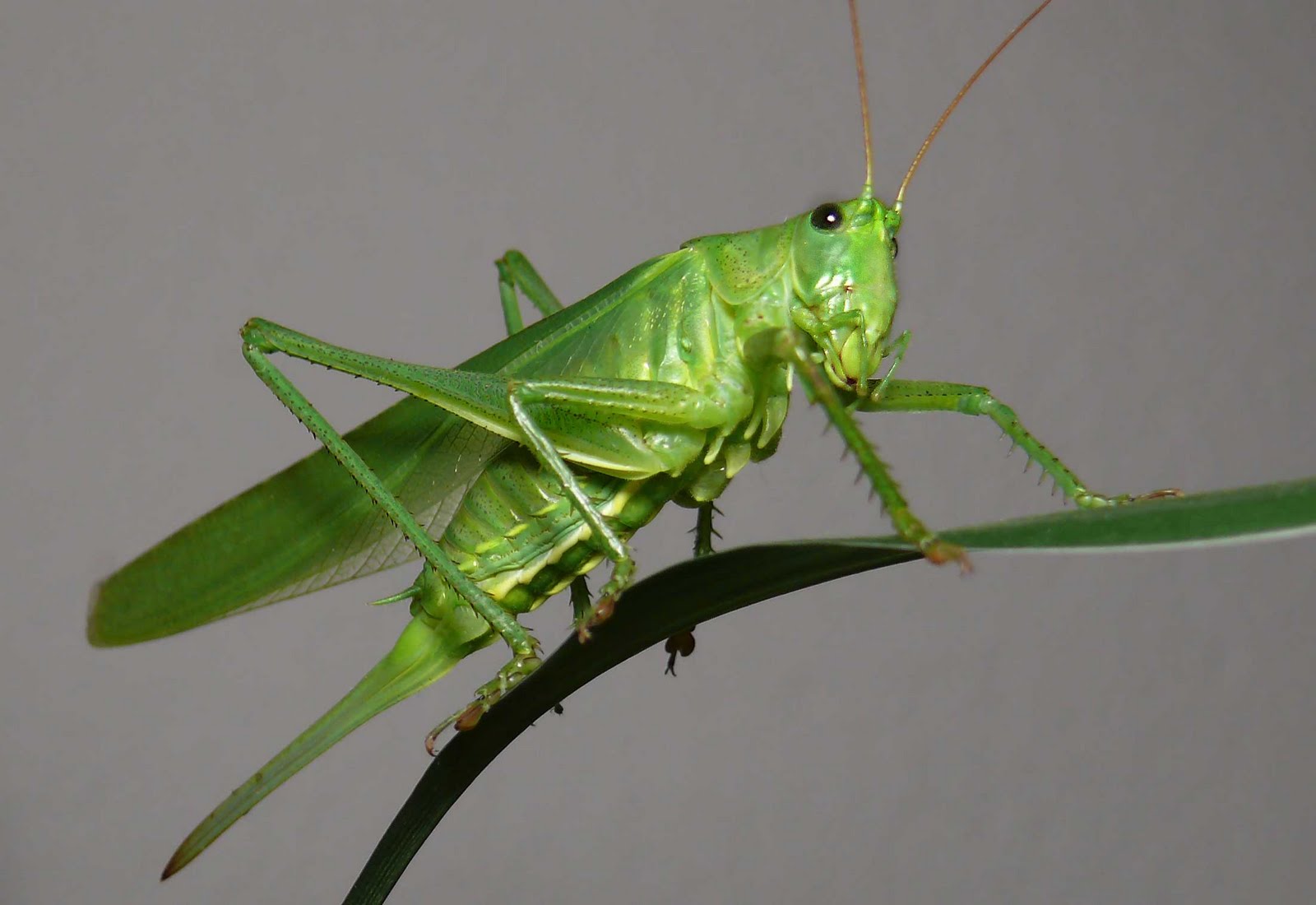
The other day, I took Dad outside to read some poems.  A friend has just given me one of Mary Oliver's collections, and I thought maybe he would find her descriptions of nature peaceful.  It seemed fitting to start with one of my favorites, The Summer Day. I had always been moved by the last line, which asks, "Tell me, what is it you plan to do with your one and precious life?"  I was planning on focusing on that with Dad, but as I read the poem out loud I was drawn to a line from the beginning.  Mary writes, "Who made the grasshopper?  This grasshopper, I mean- the one who has flung herself out of the grass, the one who is eating sugar out of my hand..."  Thinking so much about the end of life has made me revisit the beginning as well, and this line made me pause. 

I've never had a solid answer to the question Where Did We Come From?  On a basic level, I believe in supernovas and evolution and the scientists' explanations.  But on days when that sounds too harsh and technical, I can't help wondering if there's a little...more.  Smelling the early blooms in spring, hearing a newborn cry for the first time or feeling true love in somebody's eyes are such indescribable moments that I want to think there's something greater.  On the flip side, sickness and natural disasters are so hard to justify.  Science can tell me that grasshoppers are part of the Melanoplus Differentialis species, which is great for an insect in a book, but looking at a specific insect landing on your arm and seeing its little beady eyes and delicate antennae makes you look at it differently.  Is there something else that adds to its beauty, its magic, its charm?  The man sitting next to me always denounced that idea as inexplicable fluff, but here he was yelling about getting to Hollister, unable to move much more than his left hand, looking blankly right through my eyes, and I was having a very hard time explaining that to myself. 

Later that evening, I was sitting on the patio with a glass of wine reading The Long Goodbye.  It's a memoir by Meghan O'Rourke about the time leading up to and following her mother's death from cancer, and the book has been a valuable resource for me to find some congruity and understanding about the process.  I was a little more than halfway through, and at that point Meghan was struggling to get back into a normal routine and grappling with where her thoughts are taking her.  That night I read,
     
     "And as I sat, a robin hopped toward me.  Its red breast was shiny, and it had bright, bold eyes.  And I thought: OK, so, resurrection; I don't know.  But what in the world- in the universe- made this creature?  Can evolution account for the mystery of life?  As a theory, it doesn't go as far as I'd like toward explaining the world....I watched it for some time, half wondering if in any way it could be my mother.  What MADE you, robin? my mind practically shouted....How could I disregard the bubbly, foolish sense of beauty I felt looking at it?  And: How could  I reconcile that with the pain my mother endured before she died?"

Sitting on the porch that night, I saw a bird in the tree above me.  As I took in the vibrant yellow of its wings and the ease with which it floated from branch to branch, I again came back to the confusion, apathy, alienation, frustration, terror and sadness that I see on Dad's face every time I visit.  On a bad day, I would use the word "suffering".  In what world that can be filled with so much magic and beauty is it okay for pain and disease to endure with such vehemence?  And when it does come to and end...then what?

Thursday, July 7, 2011

All Choked Up

It's common for the elderly to have problems with swallowing.  As the body starts to decline, it's just one of the basic functions that starts to fail.  They are at high risk for aspiration, which is when food, saliva or anything else enters the trachea and lungs, often leading to infection and pneumonia.  It's especially common in people with dementia, because the body essentially forgets how to swallow properly.  The larynx no longer closes, which is key to preventing aspiration.  Oddly, thin liquids like juice and water are especially problematic, because the muscles don't identify them as substances so they sneak past and can cause choking. 

Dad starting having problems with this about a year ago, and ever since he has been on either "nectar thick" or "honey thick"- a thickening agent is literally added to his beverages so he remembers to swallow it.  In the past few months, he has started coughing more and more when he eats and Julie, his Hospice nurse, has noticed more buildup in his lungs.  Three weeks ago we downgraded him to a "mechanical soft" diet, which basically includes foods he doesn't have to chew very thoroughly but leaves room for some texture, such as Sloppy Joe meat and scrambled eggs.  Eating has always been a source of pleasure for him, so I was reluctant to even take that step, but it seemed necessary. 

Pureed lasagna...yum
 I talk with Julie several times a week so when she called this morning I figured it was just with a medication update or something like that.  Instead, she said, "We have to put Henry on a pureed diet."  Then she paused before adding, "He choked this morning during breakfast.  Carrie, he turned blue.   His lips were purple.  It could have been...really serious.  He was visibly scared, actually panicking."  After I caught my breath, she told me that she was feeding him and he started coughing, then stopped coughing and stopped breathing.  Fortunately, one of the hefty med students was nearby and was able to lift Dad out of his wheelchair and dislodge whatever was stuck.  Had that not happened in time, well...I shudder to think...Dad choked on a piece of candy while lying in bed when he was a teenager, and I think it's the only thing he's ever been afraid of.  He's always said it would be the worst way to go, and yet it almost happened to him this morning. 

I had been doing okay.  I had gone several weeks without a breakdown, and can't remember the last time I cried.  It's been a year and a half since Dad was first admitted to Hospice, and it sounds strange but I'm actually sort of kind of getting used to it.  That in no way means that I've stopped my care and concern, or take it for granted that he will be there the next time I visit- I make sure that every time I leave the last thing I say is "I love you" and I am somewhat comforted knowing I will have no regrets, should something happen to him while I am not there.  But still.  The call this morning set me off in panic mode again, and after I hung up with Julie I sat down on the floor and cried.  And the memory of the taste of salt and tears on my face gave me flashbacks to some of the things we've been through, and I cried some more.  The release left me exhausted and nauseous, but it obviously needed to come out.  All day I've pictured his blue face and even now, eight hours later, I can't stop shaking. 

I somehow have it in my head that Dad is going to die this nice, comfortable death that they describe in the Hospice books.  He'll stop eating, become less responsive, his body temperature and blood pressure will go down, and he might even feel like he's in a peaceful place.  Julie will see that death is more imminent, and I'll be able to spend his last two days or so with him, holding his hand and singing.  Even if he does catch pneumonia, which is likely, they can usually predict the actual death within a few days.  But what if it doesn't follow that pretty, linear pattern and something happens while I'm not there?  I've read so much about grieving, talked with so many Hospice workers, commiserated with so many friends going through a similar journey.  But you're never prepared.  I thought I was ready-ish.  But my father almost died this morning without me there.  And I'm not ready.

Wednesday, June 29, 2011

Back to Biking

I don't remember ever not having a bike.  Growing up in Chicago, we lived across from Lincoln Park and would ride everywhere- to the park, the zoo, the beach.  My school had yearly Trike-A-Thons, and we would decorate our rides with streamers and balloons and parade them around the park with pride.  We moved to Evanston when I was six, and I was finally old enough to ride a Big Girl bike- a beautiful red Schwinn with a glorious sparkled banana seat.  I remember my father holding me up while I practiced balancing, but it was pretty natural for me and in no time I was riding solo.  
Riding away, circa 1983
For a few years we lived in Barrington Hills, which lived up to it's name and since Evanston is completely flat I loved the change of elevation.  I would go out every morning, climbing up the hills and gliding down.  It was a difficult period in my life, and biking was a source of joy and escape and a way to feel grounded. 

In college I was casually enjoying biking, swimming and running, so when a friend asked me to do the Chicago Triathlon with him I thought, why not?  Without a doubt, the bike ride was the easiest and most fun part for me and I'm glad it was sandwiched between the grueling swim and exhausting run.  Until a few years ago my participant number was still stuck to my helmet, and seeing it was always a source of pride.  I later studied in England for half a year, and I was able to find a shop that let me rent a bike for $70 for the whole time.  It allowed me to get to a job and take classes at a branch of the campus that otherwise wouldn't have been accessible.  At the end of the six months it was hard to give that bike up. 

I've had my share of accidents.  My chin has been stitched up twice and I got doored on my birthday one year. I crashed in the woods while trail riding and have stitches in the pattern of the gear that cut through my calf.  My friend made a tourniquet out of his shirt and took off to go for help but it was a good 45 minutes before the EMTs made it back with a gurney.  Finally, five years ago, thanks to a hit-and-run driver I face-planted into a lamp post and bit through my lip.  My top four teeth were all replaced, I had 9 root canals on my bottom teeth, I have 13 stitches on my lip and I can't bite down all the way on the left side of my mouth, even though I had 6 months of physical therapy after the accident.  I get really bad jaw and headaches, have to sleep with a retainer, and now have a goofy half smile that I default to- I'm pretty sure there was some nerve damage to the right side of my face.  Alas, I was up and riding again after as soon as the doctor ok'd it. 
I inherited a car a few years ago when I took Dad's keys away, and I know it's made me lazy.  If the weather is iffy or I'm tired, it just seems so easy to take the car instead of hopping on my bike.  Still, until this past winter I was still using my bike almost daily.  Then Chicago had Snowmageddon and the bike I've been riding regularly for 10 years got abandoned.  It wasn't in great shape to begin with, and six months of non-use took a real toll.  When I guiltily brought it in to the shop for a tune-up a few weeks ago, they said the cost of fixing it almost didn't make it worth it.  Instead, they sold me a completely refurbished Trek that had new brakes, chains, a new tire, the works for just over $200,  and I love it. 

In the past week I've reconnected with the joy I've always gotten from riding- the wind in my face, being self-propelled, moving past cars stuck in traffic.  I've already saved almost $10 on meters I would normally have to had paid by driving, and saved on gas.  It's better for the environment, and great exercise, but most importantly it's just fun, and I'm looking forward to a great summer on two wheels.

Monday, June 13, 2011

Man vs. Dog

Last Friday, Beau's osteoarthritis flared up after what was probably an averse reaction to his rabies shot.  Although he has no other major health concerns, at 16 years old his body just didn't take the medication well.  By 10am he had lost all ability to stand by himself, and my mom made a makeshift doggie area out of rugs, blankets and towels in the living room.  She spent the night on the couch next to him, trying to reassure him that everything would be okay.  By the next morning they weren't, however, and mom had some neighbors help take him to the vet.  After ruling out a heart condition or a neurological problem, the doctor put him on a low-dose steroid and said to keep an eye on him.  For five days Mom's neighbors and friends came over several times a day to carry him outside, and mom spent hours washing and changing the towels when he couldn't wait to relieve himself. 


Beau, taking a nap earlier this week
 On Thursday mom took him to a doggie chiropractor, who said the discs in his back were severely fused and his left hip was especially weak.  He told her point blank what nobody else was ready to say- that if Beau didn't start walking soon, his insides would start smooshing together and he would most likely suffer from organ damage.  I think this really hit home for Mom, who hadn't slept all week.  For the past eight years Beau has been her devoted accomplice, friend, and family member.  He is the best companion she could have found, and his easy, cheery disposition keeps her spirits raised.  They are perfect for each other, and although we both knew this time was going to come, I guess we hoped it would happen later rather than sooner.  I've often said that if Beau could just live forever, for Mom's sake, that would be really great.  If she were fully able-bodied, things might be different, but she doesn't have the ability right now to pick him up or thoroughly give him the care he needs. 

The decision to let him go would be easier if he showed signs of suffering, but the thing is he still looks like a gosh-darn happy puppy and his spirit is just as strong as ever.  When it comes to matters of life and death, I'm a pretty big believer in the Quality of Life question, and since I only see him twice a week I can't say exactly how much Beau's is affected right now.  I do, however, regularly see residents at Dad's nursing home who are completely unaware of their surroundings and are unable to do anything for themselves.  They either exist on Ensure or are spoon-fed pureed fish cakes and honey-thick soup base.  They have fits of rage, terrors and hallucinations, don't recognize their family, and as far as I can tell aren't responsive to compassion, touch or any other outside stimuli.  Their overall Quality of Life is heartbreaking, yet they can go on in this state for months and years without anyone suggesting "putting them down".  For the record, neither am I.  However, as I'm intimately involved with these two beings who are nearing the end, I can't help thinking of how dialectical our values are. 

Beau is Mom's dog.  While I love him dearly, I have never lived with him and don't have the same connection that she does.  I've witnessed a change in her over the past week, and she now seems to slowly be coming to some acceptance that it's nearing the time to let him go.  It has to be her decision, and I trust that she will know how and when to make it. 

Monday, May 16, 2011

Reminders

One of the first things I did when Dad was diagnosed with Alzheimer's was sign him up for Safe Return, a program set up through the Alzheimer's Association. He was registered in their datebase with my contact info and received a bracelet identifying that he had Alzheimer's and to call them if he was found wandering or if something happened to him.  I expected him to argue with me, but he let me put it on with no contest.  I think on some level it provided him reassurance, as well.  I later got him a second bracelet with "Call Daughter Carrie," my phone number, and his medicines listed.  When he did go out alone he was careful to just go around the block, the neighbors were always looking out for him.  Only once did he run into a problem, but unfortunately the bracelet didn't do us any good. 

At the time he had a caregiver in the mornings and I was going over to his apartment once or twice a day to check on him and make dinner.  One afternoon about four years ago I popped in around 4:30p, and when I couldn't find him I assumed he was out for a walk.  I made him a cup of cocoa, straightened up a bit and waited for him to come back.  After 20 minutes or so I left a note in the kitchen, went outside and walked up and down the street.  Getting concerned, I jumped in the car and started slowly driving around the neighborhood, asking anyone I saw if they had seem him.  I went to all the places we had walked together- the lake, Starbucks, the library, even Jewel.  There was no sign of him, and his neighbors didn't know anything.  After an hour and a half of this I frantically called 911 and filed a missing person's report.  An officer met me at his apartment, and I gave her pictures, descriptions, medical history, and guesses at what he might have been wearing.  The officer told me to stay in the apartment and sent six squad cars out looking for him.  Restless, anxious and imagining the worst, I busied myself with calling everyone I knew in the area to alert them what was going on.  My mom and one of her friends came down and started canvassing as well.  It was getting dark and I was boarderline hysterical.  My father had been lost for almost five hours with no leads.  

I was sitting on his kitchen floor at 9:30p in tears, my head in my hands, when I saw the ambulance lights flash out front.  I ran outside to see two paramedics unloading my father from the truck and leading him to the apartment.  I stared, dumbfounded, for a moment before running up to them.  I didn't know whether to laugh, cry, or scream- I think I emitted a sound that combined all three.  Dad's face was wrapped up in bandages but he was walking.  After giving him a hug I asked them what, the fuck, exactly, was going on. 

Dad, after the bandages came off

They didn't have the whole story, but I was able to piece together that Dad had gone outside in the early afternoon, tripped over something and taken a spill.  He was badly cut and bleeding profusely, and fortunately a passerby saw him and called 911.  They took him to Evanston Hospital, where he underwent a CT scan, an MRI, received 13 stitches to his face, and was being held for observation.  He had told them his name and they were able to look up his information and medical history. My phone number was the only one in his records, and I was listed as the primary contact and power of attorney.  Nobody ever called me. This still blows my mind.  I had taken him to the same ER a month before to have a dog bite attended to.  They didn't look at his ID bracelets, and though they knew from his records he had Alzheimer's they just were treating the immediate problem, not the whole person.  I had a heated, lengthy conversation with the head of the ER the next day and the best explanation she could give me was that it was a busy night and they had some new med students working.  I was livid and threatened halfheartedly to sue, but I knew I didn't have the time or energy.  She wrote off the hospital, doctor, and ambulance fees and we left it at that.  I just wanted the nightmare to be over. 

I try as much as possible to focus on the present moment when I'm with dad now, and not think about all we've been through together.  Last week, though, the nursing home gave everyone new standard identity bracelets and gave me the old ones back.  This story flooded into my thoughts, and I was reminded of how traumatic it was for both of us.  Just one more link in the bond he now seems unable or unwilling to break. 

Saturday, April 23, 2011

Keeping the Faith


Found it!  Circa 1987
 I grew up with the understanding that my father was an atheist.  Our "Christmas" decorations consisted of miniature Chinese silk animals my parents collected on their travels and wooden horses reflecting my mother's Swedish heritage.  We spent Easter hunting for plastic eggs in the backyard and making our own chocolate bunny candies from molds.  The only time I ever heard him reference any religion was when he would yell, "Oh for Christ's sake!" or "Godamnfuckingshit!"- actually, we heard those quite often but they had no greater meaning than him venting his anger and frustration.  Along with his five siblings, he went to Catholic school from elementary through high school, and he was always proud that all six of them got scholarships.  "My mother never paid a cent for our education," he used to say.  I've heard stories of him settling his arguments with the Brothers by literally putting on boxing gloves and duking it out and I'm sure his rear broke many a nun's ruler.  He went to WWII right after school then attended NYU on the GI bill.  Maybe his Catholic schooling never permeated, or maybe something happened during the war changed him.  All I know is that I never heard him mention God with anything but disdain. 

As he falls deeper in to his Alzheimer's and continues nearing death awareness, a different language is starting to come through.  The first time he told me he was going to go to Hell, I was shocked but thought maybe it was so ingrained at a young age that "sinners" go there after they die that it seemed a natural conclusion to him.  He's been having war flashbacks for quite some time and has talked of needing to reconcile with some of his estranged children, and I think for whatever reason he's looking back on his life with shame.   It's hard to watch a man who was in so many ways hugely successful to go through that, but he's done a lot of things in his 86 years that I will never know about. 

Last week out of nowhere he introduced a new dialogue that I wasn't ready for.  I was feeding him dinner and we were listening to Ella Fitzgerald.  In between spoonfuls of yogurt, he blurted out, "I'm scared of dying."  I've never known my father speak of death even in abstract form or be scared of anything, and it surprised me.  Maybe for the first time he was feeling his own mortality?  Before I could answer, he continued to tell me that he was scared of living, scared of dying, and scared of Christ.  Jesus doesn't love him, and he didn't love Jesus anyway.  He was scared of dying, going to Hell, can't pee, scared of living, hates Christ, scared of dying, and should have told her he loves her.  "I love her so much," he wailed, "she's so good and I love her and I never told her..." 

After gaining my composure, I ask who he was meant- was he talking about me?  "No."  Did he mean...Carrie?  "Yes, Carrie, I love her so much, oh noooooo!"  With tears in my eyes, I said the only thing I could.  "Carrie knows you love her, Dad.  She knows that very well.  And she loves you, too."  It was strange speaking to him partially in third person, but that seemed to be where his reality was right then. 

I am far from an expert in damnation, repentance, moral sin, or the afterlife, and don't feel it's my place to try and comfort him about any of that.  However, it's obvious his thoughts are being plagued by guilt and fear and he needs to work through them.  The chaplain went to visit him the next day, to try and work through some of unresolved religious questions, but Dad was so worn out from his release that he was zonked out the whole day.  Subsequent visits with the chaplain have been unsuccessful, but at least we know it's on his mind and are ready to receive his concerns. 

Agonizing over needing to tell me he loves me and not realizing I'm sitting right there, however--that's a pain nobody can take away from him. 

Tuesday, April 12, 2011

A Transitional Decade


Mom (left) and Diana decorating
Christmas cookies, Dec 09
April is Parkinson's Awareness month, and it also marks the ten-year anniversary of Mom's diagnosis (for more about the disease, see my "Bonnie and Parkinson's" page).  When I first found out, I was halfway around the world and halfway through my semester studying in England.  Although it didn't come as a total shock, it was certainly unsettling.  In my journal from that time, I wrote, "...all the signs are there, I've known for quite some time something was wrong but I just didn't have a label for it and now it's Parkinson's Disease.  That is why she walks with her arms hanging in front of her, has no facial expressions, sometimes loses her balance, is losing her handwriting ability, and is just SO SLOW with everything." 

She actually doesn't walk with her arms hanging in front of her now, or maybe she never did, or maybe I'm just so used to it- I can't remember, and that makes me sad.  It's hard for me to think of mom before Parkinson's, even though I try to be mindful of reminding myself that it's only a diagnosis; she's still the same Mom.  Yet it's a huge part of her, and therefore my, life.  Weekly trips to an acupuncturist in Uptown have helped more than anything, but isn't covered by insurance and isn't exactly cheap.  Yoga has become even more important, as it challenges her brain and body to coordinate in new ways.  Even though she claims to hate it, she chugs a glass of V-8 juice every day to avoid taking a sodium pill, which raises her blood pressure in hopes of avoiding white outs.  I know that every time I come over, I'll give her a ponytail because she can't maneuver the rubber band, and she won't have to worry about her hair for the next day and a half.

I don't notice people with visible signs of Parkinson's out in the community very much, which seems odd considering that more than a million Americans are affected by it and 60,000 more are diagnosed each year.  When I asked her neurologist why, he said that, frankly, the symptoms are so visible (it's hard to hide shaking hands and shuffling feet) that many people with PD are intimidated or embarrassed to go out regularly, and the associated depression doesn't help.  In addition, they may need help with ordinary tasks and not be comfortable asking a stranger for assistance.

I have always been impressed that Mom hasn't let her diagnosis hold her back.  If she's alone and needs help putting her coat on before taking the dog out, she will go outside and stand on the sidewalk, and within minutes a neighbor or fellow dog walker will offer assistance.  If she's at a restaurant with friends, she will ask them to cut her chicken or open a sugar packet for her.  It may take her 25 minutes to get dressed in the morning and another 5 to put her shoes on, but she has a flexible schedule and her independance is the one thing she's afraid of losing more than anything.  Instead, she accommodates by wearing shirts with wide head openings and elastic waist pants that are easier to get into.  If she's late for an appointment, it's not the end of the world, and it's more important for her to get out and socialize.  If the people in line at the grocery store get impatient waiting 30 seconds for her to get her credit card out of her pocket, well, that's their problem. 

I really am kind of dumbfounded that it's been ten whole years.  It's been somewhat of a roller coaster, and I do worry every time she drives, trips over the dog, has a white out, or sleeps for 16 hours at night.  Her neurologist is pushing deep brain stimulation (DBS), a very invasive procedure that is supposed to have good results.  We'll cross that bridge when we get to it.  For now, one day at a time seems to be working.  Still, I'll glad to be around.  Ten years ago, lying in my dormitory bed in England, I wrote, "She seems really positive whenever I talk to her- I hope it's not a front.  Diana (her best friend) visited her yesterday.  I hope she gave Mom a hug.  I want to give her one..."

Thursday, March 24, 2011

Reading


Maybe 18 months?  I hope it was
 a picture book...
I loved books growing up.  My favorites- Goodnight Moon, Where the Wild Things Are, Owl at Home, Cloudy With a Chance of Meatballs, The Very Hungry Caterpillar, Frog and Toad, Dr. Suess- I now think of as classics and get a little nostalgic every time I see them in the bookstore.  When I got a little older, I could easily get lost following Amelia Bedila's escapades, imagining I lived in the hotel with Eloise or creating my Choose Your Own Adventure future.  I later got sucked into the Sweet Valley Twins and Babysitter's Club series, but even those had some important messages- I learned about diabetes from Stacy in Babysitter's Club, and that it was okay to be smart like Elizabeth in Sweet Valley Twins.  In high school I loved Brave New World, Catcher in the Rye, Jane Eyre, The Great Gatsby and other "required reading" and thought it was cool to become part of this mysterious culture of people who had read and could talk about "those books."  These days I still love to read, but don't take the time to indulge nearly as often as I wished I did. 
A few weeks ago I had dinner with friends who have a two-year-old daughter.  She was showing me her favorite toys and books, then picked up a 200 page hardcover and began flipping through it.  "Actually, that's mine," her father told me.  "The Miraculous Journey of Edward Tulane- it's a children's book but I just started it and I love it!"  I glanced at the front cover, saw a picture of a stuffed bunny walking towards the door of a big house, and gave my friend a questioning look.   He started telling me about how this rabbit named Edward, who is actually porcelain, goes through a wild ride of adventures and learns some valuable lessons along the way.  The more he told me, the more enthralled I became, and I decided that if this college-educated, world-traveling friend of mine loved it so much I should read it for myself. 

The next day I went to the children's section of the library and told the librarian I couldn't remember the exact name but I was looking for something like, "the amazing journey of...".  She immediately smiled and led me to the book.  Still a little skeptical, I sat down to look at the first few chapters that night...and ended up reading the first 100 pages.  Spoiler Alert: I'm Going To Tell You Some Plot Here!!!  Okay.  This rabbit, who comes from a well-to-do home, has a really easy life but hasn't learned how to love.  Due to circumstances  beyond his control (which, for a porcelain rabbit, would be almost anything), he gets thrown off a boat, kicked off a train, made fun of by snobby porcelain dolls, turned into a puppet, buried for months in a garbage dump, and in an assortment of other challenging situations.  I won't ruin the end, but suffice it to say I finished it the next night and went to sleep happy.  It was a beautiful story with serious lessons children of all ages could benefit from.

A close friend of mine is a school librarian, and is always telling me of this JV series or that young adult book that she read and loved.  But I seemed to be stuck in reading things that were Valuable or Applicable or Age Appropriate.  Now, after remembering the thrill and satisfaction of being immersed in a simple story that doesn't have to be plausible or practical, I may just take her next recommendation.  Lemony Skicket, anyone?